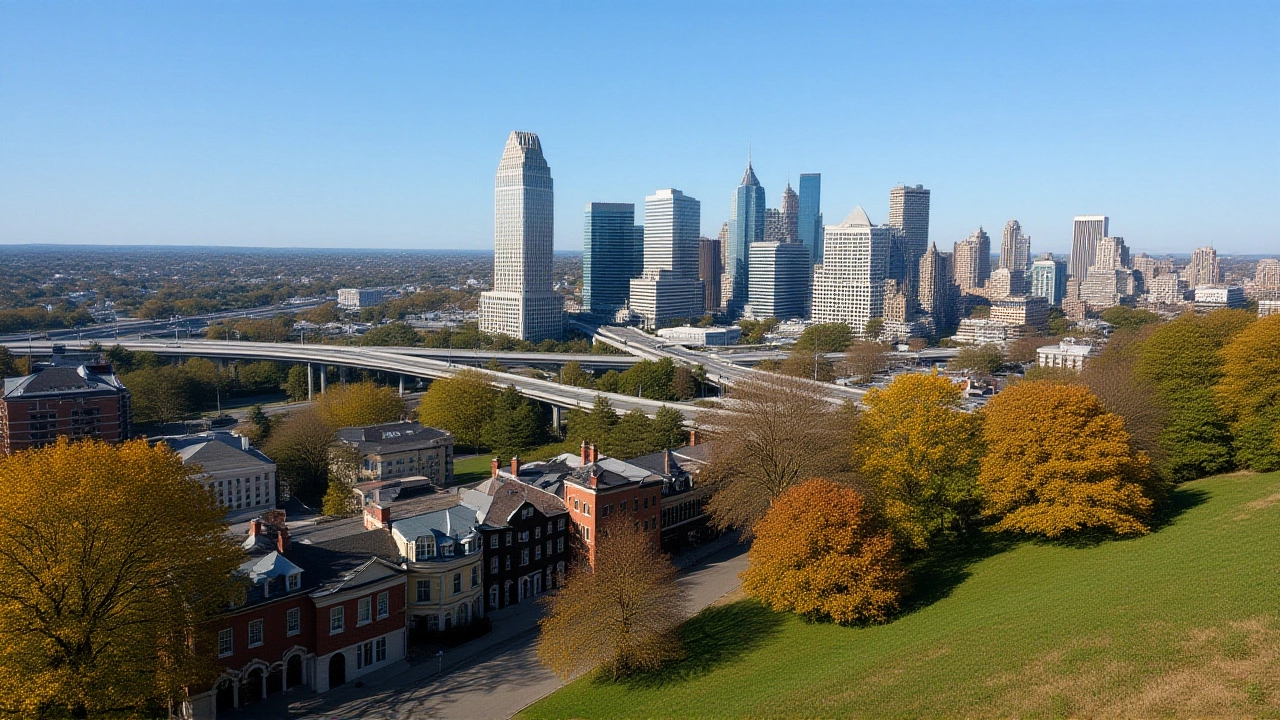
A violent street brawl involving nearly 100 people erupted in downtown Cincinnati around 3:00 a.m. on Saturday, July 26, 2025 — just hours after the final act of the Cincinnati Music Festival, a Cincinnati Reds game, and a Big3 basketball match, all drawing over 150,000 fans to the city. What began as what police called a "sudden dispute following a verbal altercation" quickly spiraled into a horrifying spectacle: a man beaten unconscious, a woman struck in the face and left motionless on the pavement until a bystander rushed to help. The footage, raw and unfiltered, spread across social media like wildfire. And then came the politicians.
From Chaos to National Headline
Cincinnati Police Chief Teresa Theetge stood before reporters on Monday, July 28, 2025, and delivered a measured tone: "The behavior displayed is nothing short of cruel and absolutely unacceptable." She emphasized the chaos of the weekend — traffic gridlock, overlapping events, overwhelmed officers — but insisted this wasn’t a coordinated riot tied to the festival. "This was an unexpected dispute among individuals," she said, trying to separate the violence from the city’s broader image.
But the internet didn’t care about nuance. The video of Montianez Merriweather, 34, chasing a man behind a car before cornering him, and DeKyra Vernon, 24, swinging at a woman’s face, became the defining image of urban decay in 2025. By Monday evening, Merriweather and Vernon were arrested. Four more suspects had been identified. Five total charges were filed. And still, the investigation continued — police poring over hundreds of hours of bodycam, surveillance, and bystander footage.
Politicians Enter the Frame
Within hours of the videos going viral, Vice President JD Vance weighed in. "I don’t have all the context," he told reporters, "but I saw a mob of lawless thugs beating up an innocent person." His words, amplified by Fox News Digital, instantly framed the incident as evidence of collapsing urban order — a narrative that aligned perfectly with his political messaging on crime and public safety.
Ohio Governor Mike DeWine echoed the outrage: "The footage... is shocking. I support local authorities bringing the violent offenders to justice." His statement, while technically neutral, carried the weight of state power. And then came the quiet dissent.
On Wednesday, July 31, The Columbus Dispatch published an opinion piece titled "Why Ohio politicians used viral Cincinnati fight to stir hate." The author didn’t excuse the violence. Instead, they asked: Why now? Why this video? Why are we suddenly hearing about "lawless mobs" when Cincinnati’s violent crime rate has been steadily declining since 2020?
The Bigger Picture
Cincinnati has spent the last five years investing in community policing, youth outreach, and violence interruption programs. The city’s homicide rate dropped 22% from 2021 to 2024. Yet the narrative that’s stuck — the one pushed by Vance and others — is that cities like Cincinnati are becoming ungovernable. The truth? This was a single, brutal incident among hundreds of thousands of people gathered for celebration.
"It’s not that the violence didn’t happen," the Dispatch piece argued. "It’s that the optics were too perfect for a political moment. A Black man attacking a white man? A woman knocked down? It’s the kind of clip that fuels fear — and votes."
Meanwhile, Cincinnati Mayor Aftab Pureval quietly urged calm. "We are a city of resilience," he said in a televised address. "We don’t define ourselves by the actions of a few. We define ourselves by how we respond." His words, however, didn’t trend. The outrage did.
What’s Next for Cincinnati?
As of July 31, 2025, no additional arrests have been made beyond the five charged. But police say they’re still reviewing footage from over 300 cameras across downtown. One detective told reporters that Merriweather and an associate, identified as Matthews, appeared to have "strategically positioned themselves" before the attack — suggesting possible premeditation. The investigation is far from over.
Meanwhile, the city’s festival organizers are already planning next year’s events. The Reds are hosting a community night in August to rebuild trust. And local nonprofits are launching a campaign called "See Something, Say Something — But Don’t Believe Everything You See." It’s a subtle but necessary correction to the viral narrative.
Why This Matters Beyond Cincinnati
This isn’t just about one brawl. It’s about how society consumes violence. How algorithms reward outrage. How politicians seize on moments of chaos to reshape public perception — often at the expense of truth.
When Elon Musk retweeted the video with the caption "This is what happens when you abandon law and order," he wasn’t just commenting. He was amplifying a political weapon. And in an era where every viral clip becomes a campaign ad, the line between reporting and manipulation grows dangerously thin.
Chief Theetge warned the public: "Anyone who inflicted harm will face consequences." But the real question isn’t who gets charged. It’s who gets to define the story.
Frequently Asked Questions
How many people were involved in the Cincinnati brawl, and how many were arrested?
Approximately 100 people were involved in the mass altercation, but only five individuals have been formally charged as of July 31, 2025. Two suspects — Montianez Merriweather and DeKyra Vernon — were arrested and charged with aggravated assault. Police say they’ve identified four more suspects from video evidence, but formal charges haven’t been filed yet. The investigation remains open as authorities continue reviewing hundreds of hours of footage.
Was the brawl connected to the Cincinnati Music Festival?
No. Cincinnati Police Chief Teresa Theetge explicitly stated the brawl was unrelated to the festival, which ended around midnight on Saturday. The fight occurred nearly three hours later, near the intersection of 5th and Walnut Streets, outside the festival grounds. Authorities believe it stemmed from a personal dispute among attendees who had dispersed after the events. Video evidence shows no festival staff or performers were involved.
Why did JD Vance call it a "mob of lawless thugs" if police called it a spontaneous dispute?
Vance’s language was deliberately inflammatory — and politically strategic. While police described it as a sudden, localized conflict, Vance’s phrasing evokes imagery of urban chaos and societal collapse, aligning with his long-standing narrative on crime and public safety. The Columbus Dispatch criticized this as an exploitation of trauma for political gain, noting that Vance has repeatedly used isolated incidents to push broader policy agendas without citing data on Cincinnati’s declining crime rates.
What’s being done to prevent similar incidents at future events?
Cincinnati has announced new safety measures for future multi-event weekends, including increased off-duty officer deployment, expanded drone surveillance in high-traffic zones, and a new rapid-response unit trained to disperse large, volatile crowds before violence erupts. Additionally, the city is partnering with local nonprofits to deploy "peace ambassadors" — trained community members who will patrol event exits to mediate conflicts before they escalate.
Has the incident affected Cincinnati’s tourism or economy?
Initial data shows a 12% drop in hotel bookings for August compared to last year, though that’s partly due to seasonal trends. Local business owners report mixed results — some saw a spike in local support, while others, especially those near the brawl site, lost customers fearing negative publicity. The city’s convention bureau launched a "Cincinnati Still Shines" campaign, highlighting its arts, food, and community resilience — a direct counter to the viral narrative.
Are there any signs this was a hate crime?
Police have not confirmed a hate crime classification. While the video showed racial dynamics — including a Black suspect and white victims — investigators say there’s no evidence of racially motivated language or symbols. The FBI has offered assistance, but local authorities say the motive appears to be personal, not ideological. The "potential hate crime" label, mentioned by Fox News, remains unverified and uncharged.